Information Book Award Shortlist 2026

This booklist celebrates the 2026 Information Book Award shortlist, sharing the judges comments for each shortlisted book. 

The Information Book Award celebrates inspiring UK-published information books for young people, up to age 16. The 12 books on the 2026 shortlist range from picture books to choose your own adventures and encyclopaedias, covering everything from why we sleep, to where we came from.

For librarians, teachers, parents and children, information books can offer a new route into reading, which encourages curiosity about the world around us, and creates an ideal opportunity for a shared experience: whether that’s sharing newfound facts, looking at engaging illustrations together, or exploring a freshly discovered interest. Sign up to the IBA Book Club for your pupils to shadow the Award and vote in four Children's Choice categories.

The 2026 Information Book Award is sponsored by DK. DK is a global publisher of internationally bestselling authors and illustrators across fiction, non-fiction, adult and children’s publishing. They have been pioneering ways to bring knowledge and adventure to people around the world for over 50 years. 

Under 7


Recycling Day: What happens to the things we throw away?, by Polly Faber, illustrated by Klas Fahlén 9781839949494, Nosy Crow

This colourful and engaging picture book with text by Polly Faber and illustrations by Klas Fahlén is the perfect introduction to recycling for young readers. The accessible text introduces the reader to the concept of recycling, starting at home and then zooming out to see the machines, vehicles and people who help us recycle. Through creative design and stunning illustrations the reader is shown a wide range of recycling plants and processes. The book closes by focusing on Not for Bin day giving readers actionable takeaways from the book without the tone ever feeling overwhelming - instead the book feels positive and joyful. 


Frog: A Story of Life on Earth, by Isabel Thomas, illustrated by Daniel Egneus 9781526600752, Bloomsbury Children's Books

In this book Daniel Egneus’ outstanding illustrations combine with Isabel Thomas’ well-judged text to pack a stunning information punch. Not just frogs, this is ‘the story of the universe, retold’. For those who are hungry for more, the information content is taken up a notch by the inclusion of a more detailed narrative with more complex vocabulary at the end of the book. A riot of colour, the thoughtful design results in a visual feast, an unforgettable and vibrant introduction to evolution. If there was ever a book to spark curiosity and inspire wonder, this is it! 


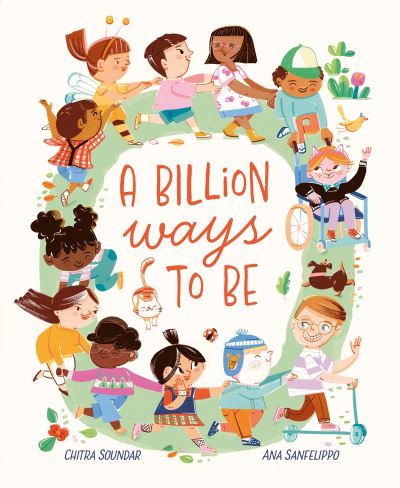
A Billion Ways To Be, by Chitra Soundar, illustrated by Ana Sanfelippo 9781445191256, Hachette Children's Books

Our diverse world contains billions of people, and we each have our own individual ways to be. This book positively demonstrates that everyone is unique in a billion different ways—from how we look and learn, to how we have fun, what our families are like, and what we believe. As a large-format book, there is a good balance of short chunks of text, colourful illustrations, and effective use of white space. The pictures are a particular strength of the book, as just reading the headings allows us to understand the concepts. The activities at the end support the message of the book and would be a fun and meaningful activity to do in a school classroom.


Where Did She Go?, by Cariad Lloyd, illustrated by Tom Percival  9781444970944, Hachette Children's Group

Written by Cariad Lloyd of Griefcast this is a heart-warming book to help support young children dealing with bereavement. It follows a little girl who, on hearing that people are sorry for her loss when her grandma dies, sets about looking everywhere she can think of to determine exactly where her grandma has gone. Tom Percival’s gorgeous illustrations bring the story to life with a light touch and gentle sense of humour. Where Did She Go? makes tackling a big subject for young children look deceptively easy. 


8 - 12 Years

About Time, by Rebecca Struthers and Alom Shaha, illustrated by Lucy Rose 9780241709320, DK Children's

From Einstein to enamelling, this book is full of surprises offering something for anyone with even the smallest modicum of interest in time. Did you know that plants and even bacteria have a kind of circadian clock? Instead of just sundials as might be expected, there are step by step instructions to make a water clock and a sand timer. Captivating illustrations combine with carefully chosen photographs to create high impact spreads on a wide variety of topics including time zones, geological time and clock mechanisms. It is fitting that there are sections on decoration, watch makers throughout time and contemporary artisans, because About Time really is a work of art.  


Choose Your Own Evolution, by Jules Howard, illustrated by Gordy Wright 9781839945533, Nosy Crow

This is such a clever idea, turning the science of evolution into an interactive adventure where readers steer the direction of life itself! Reminds me of ‘The Fighting Fantasy’ – You are the Hero books, and this structure I think makes it fun and engaging for teens, while keeping the science solid and easy to grasp. The illustrations really bring it to life, supporting the ideas without oversimplifying them. It’s inventive, educational, and a brilliant conversation-starter, and the sort of book that can help young people think hard about how and why we became what we are. 


Why Do We Sleep?, by Cathy Evans, illustrated by Polya Plavinskaia 9781800660588, Cicada Books

Packed with fascinating information, this book is a fact fan’s delight. Cathy Evans’ perfectly pitched text combines with Polya Plavinskaia’s bold and original illustrations to create a compelling and memorable book which offers far more than the title may suggest. Sleep is explored in its widest sense from the science of human sleep and interpretations of dreams and nightmares, to the four sleep chronotypes and different animal adaptations like dolphins which shut down half of their brain at a time in order to remain permanently awake. With memorable standalone double-page spreads, this book is ideal for grazing, dipping or reading from cover to cover and would be a great shared read with a friend. Whether you’re into science or animals, self-discovery or folklore, this book won’t disappoint. 


Science Detective Agency, by Steve Derrick, illustrated by Miriam Serafin 9781526329912, Hachette Children's Group

Can you solve the crime with forensic science? A crime has been committed, and the reader must solve it using a range of scientific procedures. Visual and textual clues and evidence are revealed as you read and observe methodically throughout the book. Fun activities, such as code breaking and testing your eyesight, along with learning how to test fingerprints and take witness statements, ensure an engaging and enjoyable read. The process of solving the crime flows logically through the book, with colourful images and well-laid-out chunks of text, making it ideal for ages 8+. Great to read on your own or with a friend. 


13 - 16 Years


Owning It: Our disabled childhoods in our own wordsedited by James Catchpole, Lucy Catchpole and Jen Campbell, illustrated by Sophie Kamlish 9781529066203, Macmillan Children's Books

This collection of 22 true stories from childhood told by disabled writers from all over the world perfectly encapsulates how the best books function as window and mirror. For those who can relate, this book, edited by Jen Campbell, James Catchpole and Lucy Catchpole, is a much-needed reflection, shining a light on experience that is largely unseen; for those who can’t, it provides much-needed insight. With humour, heart and striking illustrations by Sophie Kamlish, these inspiring stories will illuminate, bring comfort and boost empathy. From blatant to inadvertent othering, to coming to terms with a disabled ‘identity’ and finding community, this book is honest about pain, fear and heartache. Crucially though, as the title suggests, Owning It offers hope, connection and shows how it is possible to take control of one’s life whatever the challenge: a vital message for every teenager.


It's a Brave Young World, by Anu Adebogun, illustrated by Soofiya and Lila Cruz 9781838916404, Little Tiger

Anu Adebogun’s It's A Brave Young World is an approachable, accessible guide to life. Abebogun's tone is pitch perfect: informative, without being intimidating. The book touches on big topics such as mental health, boundaries, friendship and family dynamics in an appealing, friendly way. Interspersed throughout the book are journaling opportunities and prompts to encourage further connection with readers.  Complemented by Soofiya and Lila Cruz’s hugely attractive illustrations, the contemporary design makes the whole package feel inclusive, enticing, and covetable.


Normal Women, by Philippa Gregory, illustrated by Alexis Snell 9780711297791, Farshore

Award-winning author Philippa Gregory has adapted her bestselling and unique social history book Normal Women for teens. Relating stories from the past 900 years that are missing from traditional history, this book puts women front and centre — from pirates and highwaywomen to nuns and artists. With content warnings for sex, violence, nudity, sexual violence, slavery, and death, it tells the stories of women who are normal but not ordinary. The text is accompanied by lino-print illustrations and side notes, creating an accessible format that encourages readers to either devour the book in date order or dip into any page. Shocking, distressing, empowering, and fascinating. 


Explodapedia: The Brain, by Ben Martynoga, illustrated by Moose Allain 9781788452748, David Fickling Books

This book really nails that rare balance between clarity and depth, explaining complex ideas in a way that feels completely accessible to 13–16-year-olds, helped by some smart visuals that amplify the text rather than distract from it. Very well structured, with each page building curiosity, sparking the “why” and “how” questions that would be great discussion starters in class or at home. It’s confident, current, and beautifully designed inside (although the cover art, as with all in the series, lets the book down). Overall, I think it’s a proper gateway into neuroscience for teenagers in this age group.