As many of us prepare to celebrate parents, carers and father figures this Father's Day weekend, we caught up with Stephen Lightbown - author of stunning new picture book, My Dad Can. Read on to hear Stephen's thoughts on representation, the magic of bedtime reading, and dads as reading role models.
My Dad Can is told through the eyes of Iris - a daughter who defines her dad by his creativity and kindness, until other children draw her attention to the limitations of his wheelchair. What do you hope young readers take away from seeing the world through Iris’ eyes? Was it challenging to write the section of the story when her perspective was changed?
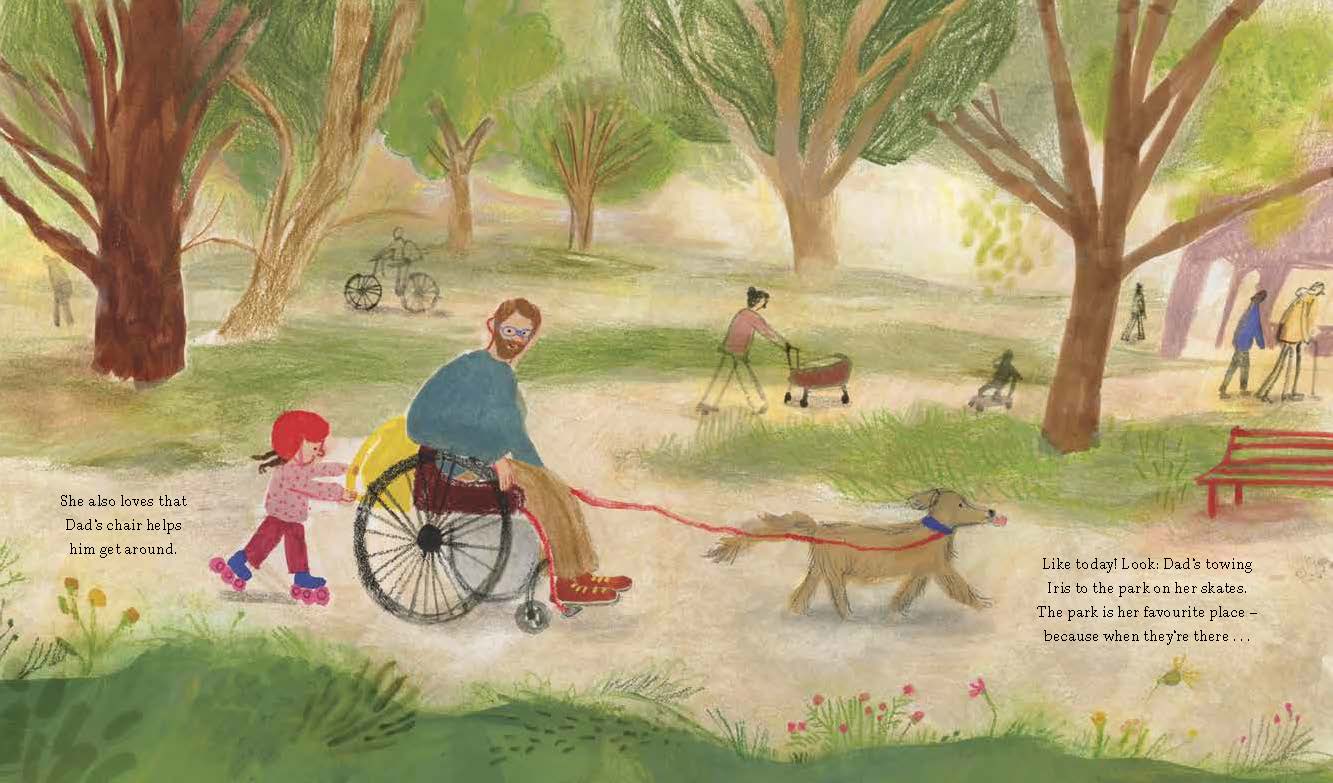
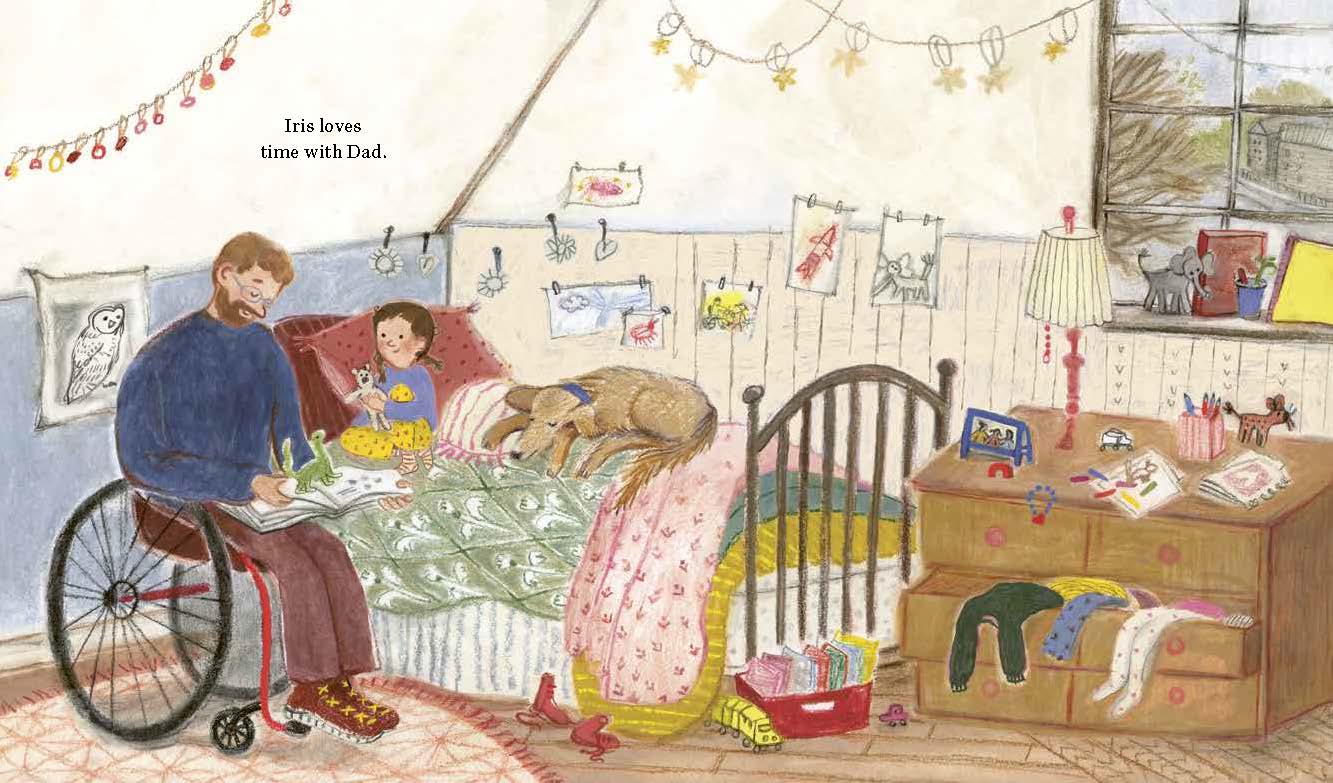
I wanted Iris to see her Dad in the same way my four year old son sees me. Which is I am his Dad. He rarely notices the wheelchair and when he does he thinks it’s a brilliant thing that helps me get about, and often it’s a climbing frame that he can climb up to get cuddles. He doesn’t see any limitations with me and to him, our relationship is normal. He wants to play games with me, ride his bike and race me, and to listen to me read him stories. Not once has he said I can’t pretend to be a T-Rex, make up a story or cuddle him when he’s upset because I use a wheelchair. I would love other children and their parents to see that children who have a parent with a disability still have lives that are full of fun and joy and play.
The section though where Iris starts to question that was challenging because as I was writing it, I was thinking about a time in the future when my son will start to question some of what he knows to be true. It’s only natural because children are inquisitive and at this age are full of questions. At the moment, his questions are from a place of innocence because he’s questioning what he sees. But children are also trusting and sponges for information and when those questions become informed by other people’s prejudices and assumptions is when I think children can start to see their parents differently and that is a challenge for both the child and the parent.
We talk a lot about the importance of children seeing themselves reflected within school library collections. For children who have a parent or carer with a disability, it can be harder to find books that reflect their life experience in a positive way. Did you deliberately set out to create something feel-good? Do you think it is also important for parents to see themselves in stories like this?
This was critical in the way I approached the book. I don’t see myself as a parent or as a disabled person in the books I read to my son, or in the media that I watch myself whether that be fiction, films or on the TV. Often the focus is on what I cannot do, the hardships I face and the hurdles I have to overcome each day. I know life is difficult and many days are filled with fatigue and pain, but I don’t need reminding of that. Too often we ignore what disabled people can do. I know I do more in one week with my son, than I did with my Dad in my entire childhood. It would be so easy for me to get down about not being able to take my son on a hike, or to tumble around with him at softplay. But that would undermine all of the things that we do together. I regularly take my son on daytrips or nights away where it is just the two of us. I feel lucky and privileged to be able to do that, I’m not sure I would describe what we do as feel-good. I just wanted to write a book that represented our life in all its forms.
We’re celebrating your beautiful book on Father's Day, which is often a moment when we think about dads and father figures as role models for their children. How significant do you think father figures are as reading role models? Do you hope My Dad Can will create shared reading experiences between fathers and their children?
I absolutely hope that dads see this book and want to read it to their children. At our home my wife and I share the bedtimes, and for both of us we make sure we read at least one book to our son before he goes to sleep. Often my son arranges a pile of books and ask if we can play libraries and for me to choose books to borrow from his library and read to him. These times where I see my son absorbed in the words I am reading to him, or when I can make him laugh when I pretend to be the characters in the book are some of the most precious memories I have with him. I couldn’t imagine not knowing what his favourite book is, or books that he loves to listen to when he’s sad or wants a giggle. But also, books are a gateway to some great conversations we have had. They provoke questions and I can see him learning from the things I am saying. Who wouldn’t want to have that experience.
My Dad Can is a brilliant springboard for wider conversations about difference, family relationships and what each of us can and can’t do. Do you have any suggestions for other books that you would recommend to read alongside it?
There are some great books out there that tackle the subject of disability and illness in beautiful and creative ways. There’s four books I’d start with: Can Bears Ski by Raymond Antrobus, What Happened to You? by James Catchpole, Mama Car by Lucy Catchpole and one which I’m sure many people have read: The Boy With Flowers in His Hair by Jarvis.
My Dad Can is out now with Quarto Books.