When you write children’s books for a living, you spend every day trying to find ways to put smiles on faces or new ideas into young minds. It’s important to think about the reaction you ideally want to create – are you hoping to make them laugh, or make them think, or take them on a journey in their heads, or make them feel a sense of wonder and magic? Maybe all of the above?
So imagining those children, those potential readers, is obviously fundamental to the job – you need to be constantly in touch with your inner three-year-old (or five-year-old or nine-year-old) and striving to fill your work with things that will stand a chance of delighting or amusing or informing or fascinating that imaginary person in your head.
I’ve been writing books for Usborne for 27 years, so that kind of imagining is something I’ve done a great deal of. But one of the strange things about my working life is that although it’s vital to be thinking about these children, I don’t meet them very often. I know they exist because I see our books in shops and I see the sales figures, and friends kindly send the occasional video of a satisfied customer. But most of the interactions between my work and the people it’s intended for happen well out of my sight. And this runs the risk of creating an odd sense of detachment – you can end up forgetting that you really are making these books for actual children out there in the world. You’re always so busy thinking about the next idea or fretting that you could have made the last one a little bit better that sometimes there’s a danger that you slightly forget why you’re doing all this in the first place.
Being reminded why is an incredibly valuable thing. Few experiences have reminded me quite so emphatically as when I attended the School Library Association Awards in November. I expected this to be an inspiring occasion; what I didn’t expect was that I’d spend much of it wiping the occasional tear from my eye. Hearing the librarians speak that day was one of the most moving testaments to the power and importance of children’s books I’ve ever heard. To hear one of them describe how the children in their school reacted when, as a complete surprise, they were brought into the brand new library that had been secretly created just for them; to hear others talk about just how much it means to these children that they have a beautiful space where they can discover new books; to hear about the journeys these inspirational librarians end up sharing with specific children when they pick out an author they think a child might enjoy and then watch a new passion being born – it’s hard to describe how uplifting and emotional these stories were.
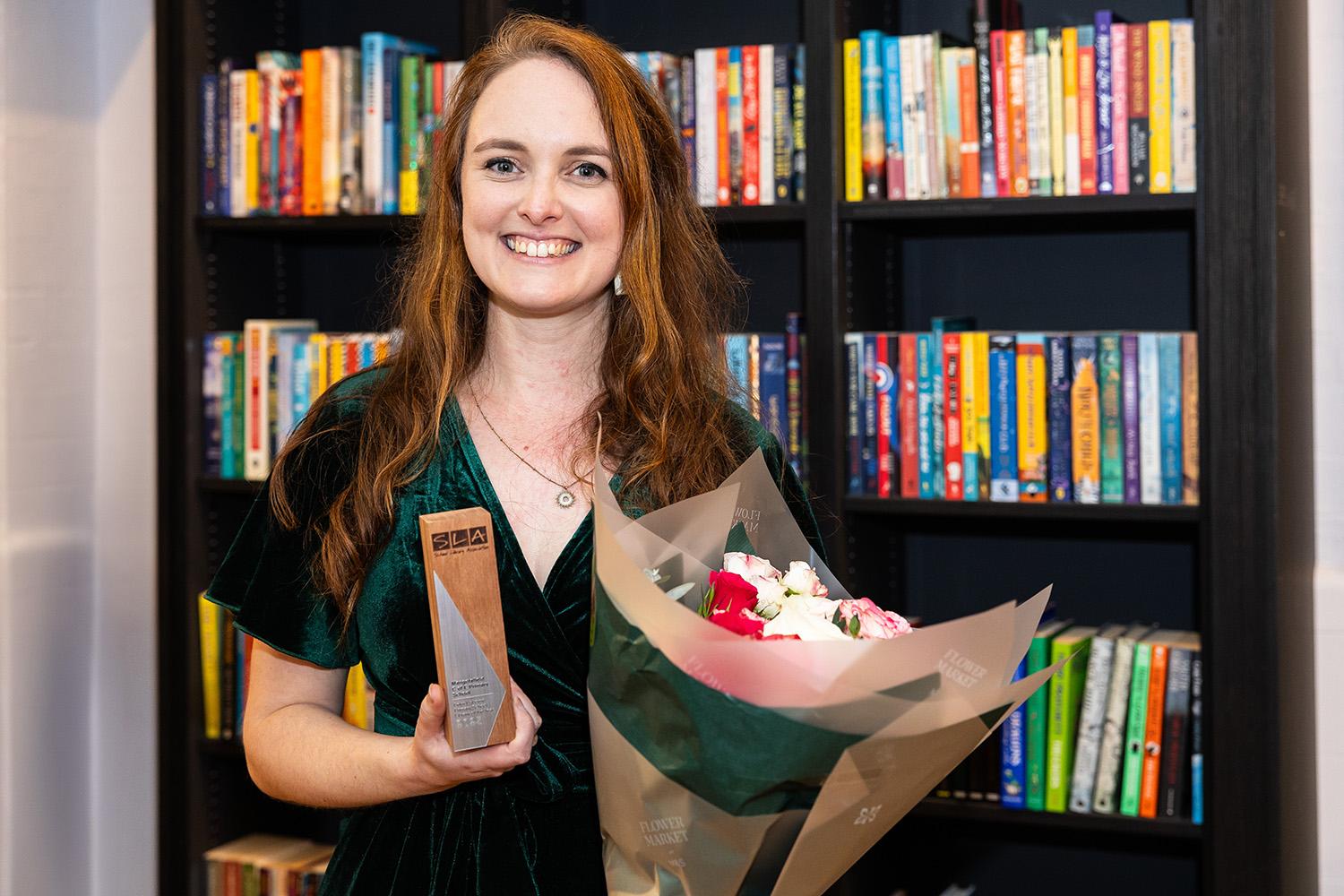
Verity Robinson, librarian of Mangotsfield C of E Primary School, winners of the 2025 Peter Usborne Primary School Library of the Year Award
“Why do I do what I do?” seems like such an obvious question, one we should all be asking ourselves all the time. But we don’t always ask it. If I’m ever in danger of forgetting why making children’s books is an absolute privilege, I’ll think back to those speeches by the school librarians, and to the atmosphere in that room as they told their stories. I went back to my desk fizzing with motivation at the idea that our team of writers and designers at Usborne have the chance to create books that may find their way into those precious libraries. Philip Pullman famously said, “After nourishment, shelter and companionship, stories are the thing we need most in the world.” The truth of that couldn’t have been clearer at the awards ceremony. I’m grateful to everyone involved – for all the fabulous work they do, of course, but also for reminding me just how much books matter, and how lucky all of us are who get to spend our working lives trying to get them into the hands of children. The imaginary readers in my head are a lot more real now, and I have those librarians to thank for that.
Katie Daynes, author and editorial director at Usborne, on the impact of seeing her books in action in schools:
A few years ago, I received a message out of the blue from someone I’d never met – an astrophysicist in America. On a visit home she’d picked up See Inside Space for the first time in years and had been transported back to her seven-year-old self, obsessed with that book and determined to have a career in space. It prompted her to get in touch – just to thank me for being, as she put it, “one of those pushes in life”.
I rarely get to see the impact a book might have. That’s one of the reasons why I love school visits – to actually see the books in action. But more importantly I get to meet potential readers, and they’re the best inspiration for new books – whether it’s the questions they ask, the fresh way they look at the world or simply their enthusiasm about anything from capybaras to K-Pop.
Making books for young children is both a privilege and a responsibility. At Usborne, we’re always looking for new ideas and exploring the best ways to put them into action. Hopefully our passion and enthusiasm come through in our books, and we can keep inspiring the next generation.
Find out more about on Sam Taplin, where you will also find information on other Usborne authors, like Katie Daynes, all their titles and many resources available for free to support the National Year of Reading 2026.
Nominations are open for the 2026 SLA Awards. Find out more and nominate your colleague or school for Secondary School Librarian of the Year or Peter Usborne Primary School Library of the Year.