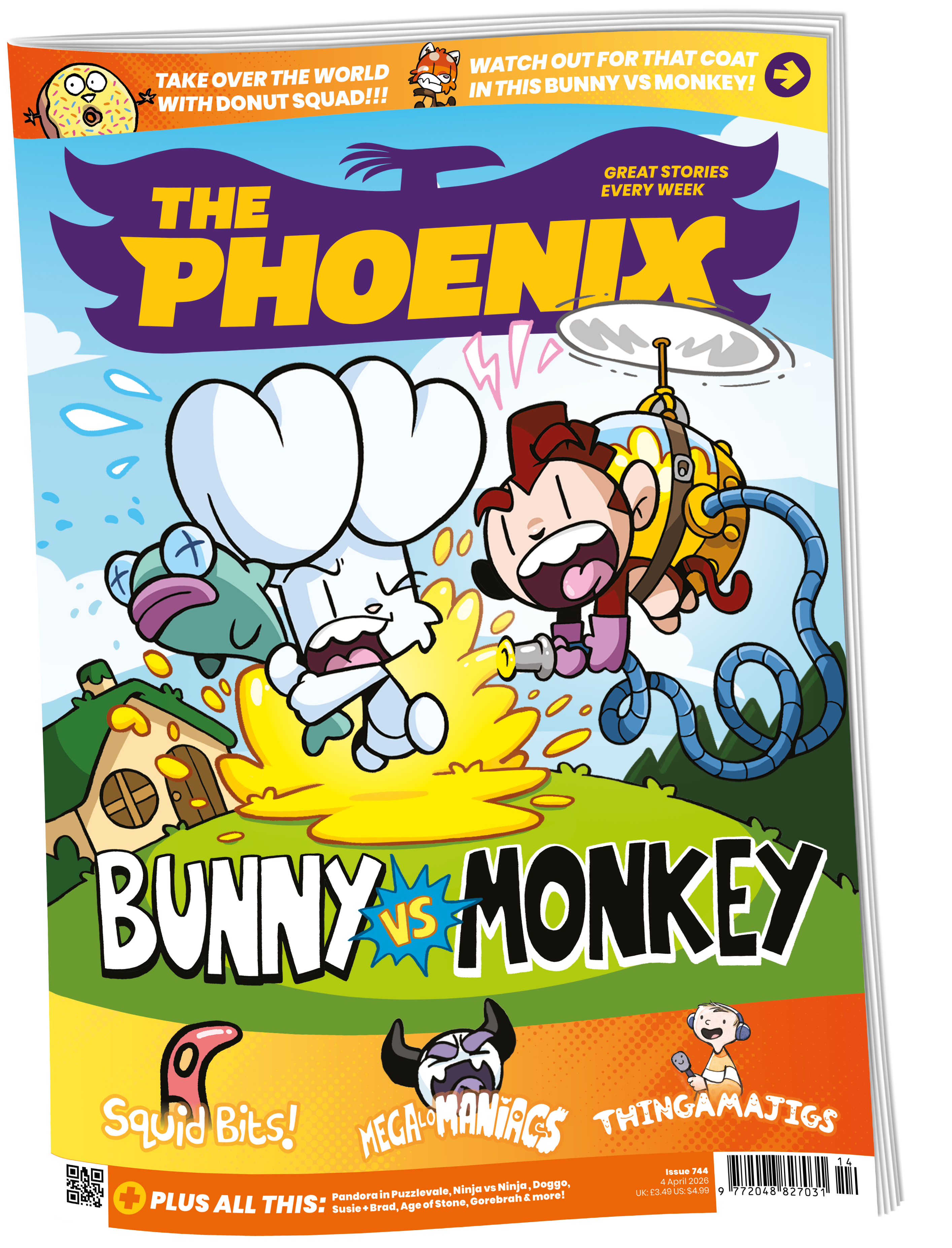
 The Phoenix Approach to Engaging Young Readers: Girls, and boys, just want to have fun
1.8 million years ago, nobody was playing. About then, our ancestors first stood up and began to walk on two legs instead of four. They weren’t speaking much. They were just trying to survive by developing bigger brains and bigger bony skulls to hold them. That way they would eventually learn to talk to each other. The trouble was that standing up and walking meant that having a baby became much much harder, because the hips of a human female inevitably became narrower. The solution provided by evolution was to get the hard and painful birth bit (and that big head!) over and out more quickly and let the child’s brain grow and develop more after the birth. A comparatively little baby head (still bloody painful to push out) could now grow into a big child’s head chock full of language and imagination.
In this way a brand new, never experienced before and very important part of life began to occur. Our closest relatives the chimpanzees don’t have it. Puppies, kittens and foals don’t have it. Neither do any other living creatures on, over or under the face of the Earth. Puppies, kittens, and foals only get a few moments before they have to start moving to stay alive. They are looked after for a few days and weeks only. Most creatures must fend for themselves immediately after birth. Young humans, by contrast, can’t move for eighteen months or so, are almost completely helpless for the first five years and have to be looked after for another ten years – and even when they are almost adult they are often a bit mentally unstable. (Those ones we call teenagers!) We call this new and entirely unprecedented part of life – Childhood!
What happens in Childhood is vital to the success of all children and all human beings. Only human beings have a Childhood. It is the special time, the special power of human beings. After the evolution of Childhood human brains could grow even bigger, and the bigger brains allowed us all to learn and develop language together. Language boomed in bigger brains. And bigger brains meant more language ability. It’s a glorious two-way process taking a million and more years of evolution. More language and bigger brains, ratcheting human beings to the top of the food chain and beyond. (The beyond is arguably the most important bit.)
In Childhood, human children didn’t have to work every day for survival like all the other animals. Did they use this protected time only to work? No. Play is the important word here. In play words can dance and their meanings can change. Human imagination is released. And you all know what human imagination can do. With a protected Childhood, humans developed time to be inventive, have fun and use language more creatively to imagine and then build more and more things. The more skilful and playful humans were with language the more successful they were able to be in their lives together. The more imaginative fun they had with language in their childhood, the more imaginative and successful they were together as adults. For language only works with other people. Language is what allows human beings to work together in groups. And the secret of working hard together is to thoroughly enjoy it. Fun and play are important.
About 12,000 years ago everything began to speed up. Primitive ways to record language were discovered; humans learned to write down their speech and their stories. Stories and jokes could be kept and recorded for the first time. Prior to that, everything had to be carefully memorised and learned by the next generation. The very first records of human words are in pictures in the form of Egyptian hieroglyphs and Chinese pictograms. Comics are very very ancient in human history. Pictures were the first things humans read. Alphabets came later. Comics predate text in more ways than one.
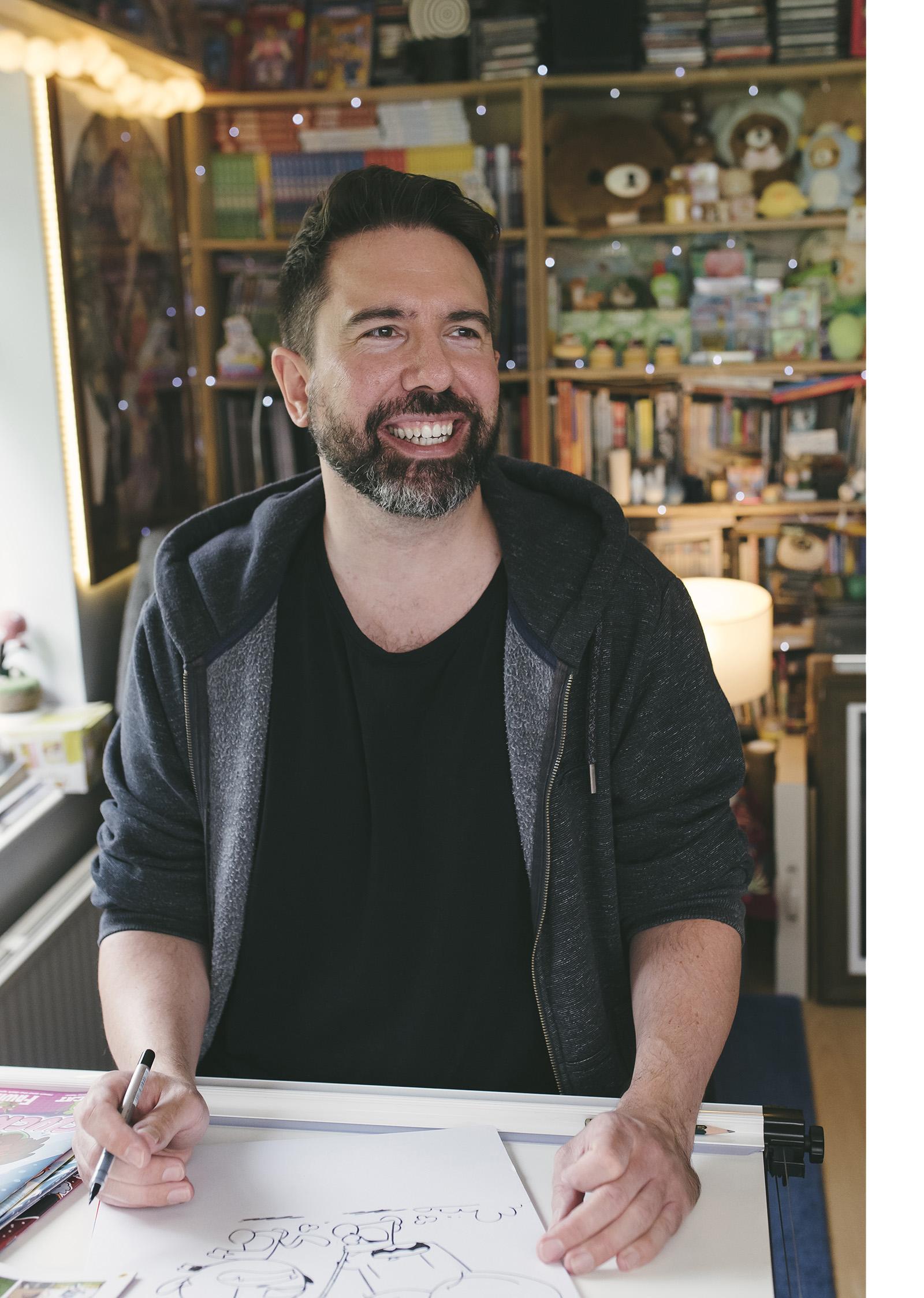
About twenty years ago I first met a human being called Jamie Smart. I was very lucky to meet him. We all are. At that time Jamie had been drawing and making comics nearly all his life. He was born in 1978 and a few months later began to talk. I reckon he started drawing almost at the same time he started talking. He was probably walking a bit before that. He learned to love drawing comics. It was probably lucky for all of us, especially our children, that he was born when he was and not a decade or two later. During the eighties, when Jamie grew up, there were still several weekly comics being published in the UK. Notwithstanding, it was a fraction of the number of British comics published weekly in the heyday. Twenty years before, when I was ten, in 1963, there must have been more than forty weekly comics for boys and girls published in this country every single week. This represented an almost inexhaustible amount of ‘reading for pleasure’ for children.
When Jamie was growing up, comic publishing for children in the UK was already dying. Between my tenth birthday in 1963 and Jamie’s thirtieth birthday in 2008, the UK lost nearly all its weekly comics. It’s a tragedy. It’s a tragedy because the massive contribution made by comics to children’s reading in UK culture and to our whole literary culture was utterly ignored. All of these comics were made for fun, all underpinned a lifelong love of reading. They were generally made for PLAY alone.
Other countries did not lose their comics (France, Japan, the USA, Italy, Germany etc. etc . . .). The reasons why the UK lost its comics are particular and not really the subject of this piece. Poisonous cultural snobbery, the lack of importance of children’s culture to adults, a totally outdated business model, and not paying professional comic artists properly are probably the main reasons for the loss of our published comics . . . together of course with The Great Lie. The Great Lie was that comics were no longer popular, that children didn’t want them any more because of television. This is what the comic industry trotted out to explain falling sales. This lie is still trotted out online today.
One thing is absolutely clear today – British children never fell out of love with comics. All children still love comics. Now more than ever. Luckily for them and us Jamie did not stop making comics to be printed physically on paper. Jamie is not alone. He would be the first to say so and name many other brilliant comic artists who kept the comic strip tradition alive in Britain for years in a comic wilderness without much reward. These are the artists who are bringing our comics back. Jamie Smart is a forty-year overnight success!
Jamie is a genius. Just read Jamie yourself to see why. If you read him, really read him, you will see human ‘play’ dancing in front of your eyes, human ‘play’ made manifest. I have myself, as an adult, sat on the stairs at home crying my eyes out with uncontrollable laughter reading Jamie and The Phoenix comic. A word to adults: if you don’t know how to read comic strips don’t let that put you off. They’re not particularly made for you. You don’t have to read them at all. If you are reading this, you were lucky, you got to reading a different way. It's the children who never got to love reading because one of the stepping stones was missing, the play and fun step. It’s the children living today who won’t get to enjoy reading because they don’t have access to good comics. Comics are and have always been the very foundation of reading and writing in this country (just as bandes dessinées are for the French.) They are a vital part of our culture, a vital layer of reading across the whole culture, that we momentarily and tragically half-lost for thirty years. Thanks to Jamie and all his brilliant comic-making colleagues, the British-made comics are flocking back to our shores and overflowing in our libraries and bookshops. And not only that, the rest of the world loves Jamie too. He is now published in over thirty territories abroad.
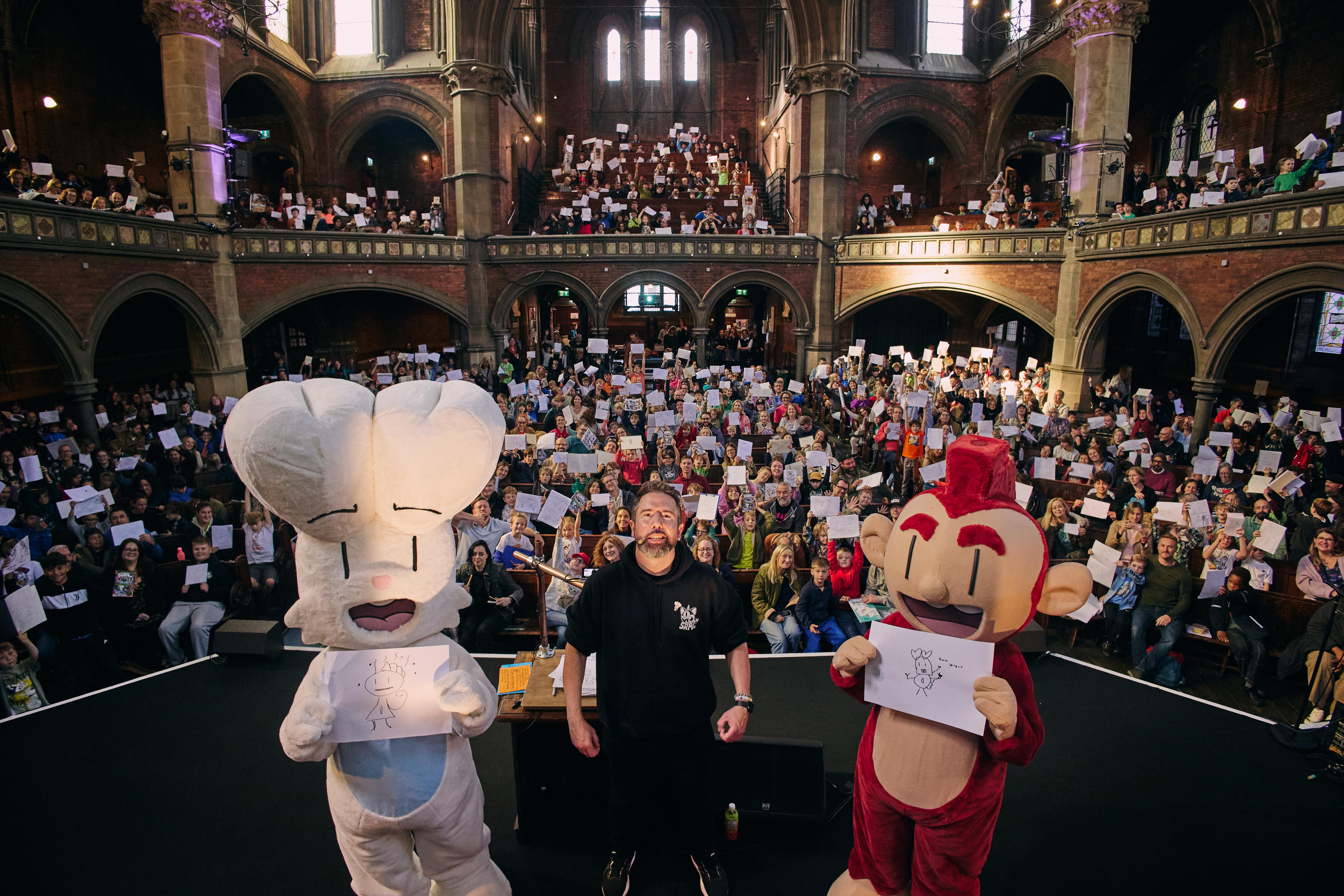
You can take a horse to water, but you cannot make it drink. You can teach a child to read, but you cannot make her or him read (for pleasure or anything else). Human beings read what they want to read, especially what they love to read. That love of reading once sparked never dies. For it is stories that make us human. But that spark has to be sparked. If you don’t love reading, then you are unlikely to learn to read widely.
What is The Phoenix comic’s approach to engaging readers? It’s pretty simple really, the same approach as has been established by human beings for thousands of millennia. Children need time to play. Children need Jamie Smart and all his amazing colleagues. So does The Phoenix. So does our whole culture.
Jamie Smart will be speaking at the 2026 School Library Association Conference on Friday 5th June. Find out more and book your tickets.